 "Jesus, I Trust in You": The Unexplained Remission of a Polish Teacher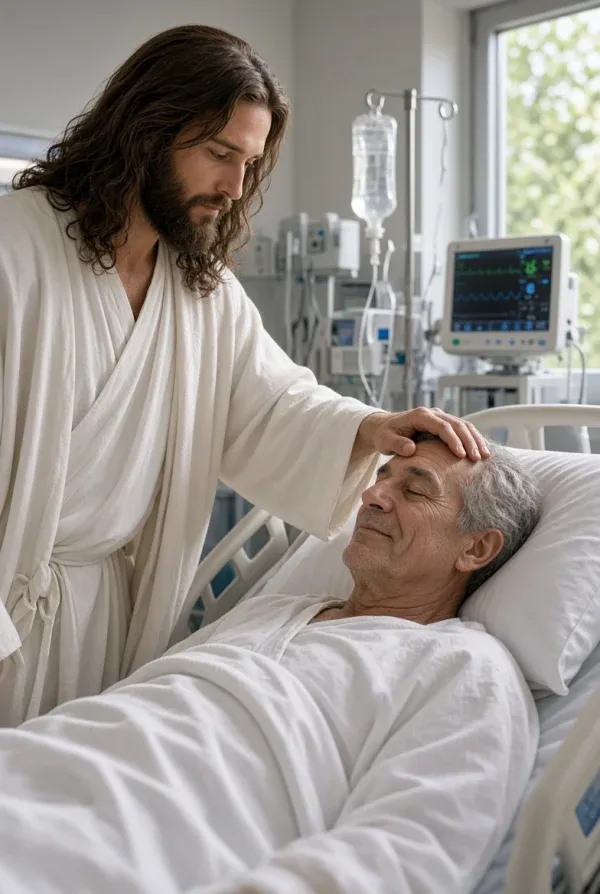
Late March 2012. Adam Biały, a 48-year-old art teacher from Rozkopaczew, near Lublin in eastern Poland, notices a red spot on his chest. It itches, grows day by day, and changes color. Then similar spots appear on the top of his left foot.
Worried, he consults a friend who is a general practitioner. "Just from her expression, you could tell it was serious," he would later recall. A biologist friend, consulted in turn, is categorical: the lesion looks like melanoma. She mentions the case of an acquaintance with an identical lesion who died a few weeks after diagnosis.
A surgical oncologist, considered one of the best specialists in the region, recommends surgery as soon as possible, while trying not to frighten his patient further. But Adam understands, from the reaction of the medical staff, that his chances are not good. "I could tell I didn't have a very good chance of surviving," he would confide.
The shrine of Radecznica and the Secular Franciscan Order
A few months before his illness, Adam — already involved in the Catholic Charismatic Renewal — had joined the Secular Franciscan Order, whose community meets in an unusual place: the Bernardine shrine of St. Anthony of Padua in Radecznica, near Zamość, in southeastern Poland.
This shrine is no ordinary place of pilgrimage. According to local tradition, confirmed after a Church inquiry, St. Anthony is said to have appeared there on May 8, 1664, to a peasant named Szymon, asking for a temple to be built and making a promise: "The sick will find health here, the blind their sight, the lame their gait; in short, all who take refuge in this place will not leave without grace." Radecznica is thus said, according to shrine authorities, to be the only place in the world where an apparition of St. Anthony of Padua has been officially recognized as authentic by the Church. The site saw its greatest growth between 1815 and 1869, to the point of being nicknamed the "Częstochowa of Lublin" — an echo of Poland's great Marian shrine.
It was within this community that Adam, while awaiting surgery, entrusted his fear and pain to St. Anthony's intercession through a novena, all the while questioning the state of his own faith: "Do I still see the face of God in myself, or have I buried it in the name of modernity and an unrestrained life?"
The prophetic dream and the road accident
On April 27, 2012, Adam sets out to meet Maria Vadia, an American charismatic preacher and founder of the Magnificat community, to arrange a gathering in his parish. The trip is full of obstacles: he is involved in a car accident for which he is, he says, unjustly blamed. "I forgive," he says at the time, refusing to enter into conflict.
The night before meeting Maria Vadia, he has a strange dream: he sees himself reading, from the ambo of the Radecznica shrine, a passage of Scripture opened at random to a single word — "fly" — while the congregation sings the Magnificat. Everything around him turns golden and transparent, "as if filled with grace." When he wakes, he is certain he will be healed. In the days that follow, he says he also hears a mocking inner voice telling him he has only a few weeks left to live — a thought he counters with a single phrase, repeated like a mantra: "Jesus, I trust in you."
Maria Vadia's prayer and the fading of the lesions
On April 29, 2012, during the long-awaited meeting, Maria Vadia places her hand on the lesion on Adam's chest and prays for a moment. He feels, he says, warmth and tingling, followed by deep relief.
The next morning, the spot on his chest has faded. The red border around it has disappeared, and the itching has stopped. On his foot, only a few of the largest spots remain.
The doctors' verdict
At the next check-up, his primary care physician cannot hide her joy. At the scheduled appointment with the oncologist, Adam asks: "Can melanoma disappear on its own?" — "Impossible," the specialist replies, before asking to see the affected area. "Unbutton further down, I can't see anything." — "But you're looking right at it," Adam replies, pointing to the faded mark. The doctor sits down, visibly shaken: "This spot doesn't even qualify for dermatological treatment anymore."
Adam nevertheless asks for the remaining tissue to be removed, to be certain. "I wanted to be 100% sure I was healed," he explains. The result of the analysis, according to his account: no cancer cells found anywhere in the body. The last spots on his foot fade away on August 15, the Feast of the Assumption of the Virgin Mary — a date Adam interprets as a personal invitation from Mary, having long resisted traditional Marian devotions.
Years later, an older doctor, while issuing him a medical certificate for work, is said to have summed up the situation in one sentence: "You had one of the most malignant forms of cancer there is, and you experienced a miracle. You escaped death by the skin of your teeth."
"I don't understand what's happening here, but Jesus, I trust in you."
— Adam Biały, while awaiting surgery, April 2012
Reconstructed document — medical follow-up notes (April–August 2012)
Reconstruction, based on published material, of the kind of notes a physician following this case might have kept:
03/29/2012 — Evolving pigmented lesion, anterior thoracic region. Irregular border, rapid color change. Clinical suspicion of malignant melanoma. Referred urgently to surgical oncology.
04/27/2012 — Patient reports stable general condition, marked anxiety. Pre-operative follow-up continues.
04/30/2012 — Patient reports spontaneous disappearance of the inflammatory appearance of the thoracic lesion (erythematous border, pruritus). Follow-up examination scheduled.
Follow-up consultation — Residual lesion no longer meets standard criteria for dermatological excision. Removal of remaining tissue proposed for histological verification, at the patient's request.
Pathology result — No neoplastic cells found in the sample.
08/15/2012 — Disappearance of the last residual lesions on the left foot.
A critical look: what does medicine say about spontaneous remission?
Melanoma is one of the most aggressive skin cancers, responsible for a large share of skin-cancer deaths. Yet the medical literature does document, rarely and under strict scrutiny, cases of spontaneous regression. A landmark review by Kalialis, Drzewiecki and Klyver, published in Melanoma Research, catalogs 76 reported cases of spontaneous regression of melanoma metastases since 1866, with an estimated incidence of roughly one case per 400 patients with metastatic disease. The proposed mechanisms remain hypothetical — an outsized immune reaction against tumor antigens, endocrine, inflammatory, or nutritional factors — but no scientific consensus yet explains why the immune system suddenly mobilizes against the tumor in some patients and not others.
Other research, focused specifically on primary, non-metastatic melanoma, points to markedly higher rates of partial or complete regression — as high as 10 to 35% in some studies — though the phenomenon remains exceptional in advanced or metastatic forms, precisely the kind described in Adam Biały's own account.
Methodologically, it is worth noting that the case rests almost entirely on the patient's own testimony, collected years after the events, without the original pathology reports, dermatoscopic images, or the identity of the treating hospital having been made public or submitted to an independent medical board — unlike, for instance, the procedure followed by the International Medical Committee of Lourdes for the investigation of claimed miraculous healings, which requires complete clinical files, extended follow-up, and the collegial opinion of physicians uninvolved in the case. In the absence of such an inquiry, Adam Biały's case remains, from a scientific standpoint, an independently unverifiable testimony rather than a strictly documented case of unexplained healing — which rules out neither the sincerity of the account nor the clinical possibility, statistically rare, of a spontaneous remission occurring at the very moment of prayer.
Sources
Sect / Religion - 27/09/2026 - Wakonda - 


Publicité

